
What That Coconut Shell Cup Actually Means
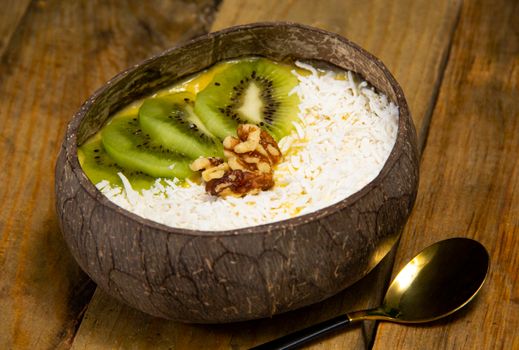
You are at a kava bar or a friend’s kava circle, and someone hands you a half coconut shell filled with muddy, earthy liquid. The shell is rounded, it will not sit flat on the table, and everyone seems to know exactly what to do with it except you. Maybe you have started drinking kava at home and wonder whether your glass or ceramic mug is somehow wrong. Either way, the kava coconut shell is often the first thing newcomers notice and the last thing anyone explains.
The short answer is that the coconut shell is the traditional drinking vessel for kava across the South Pacific, and it has been for centuries. It is not a gimmick or a souvenir-shop touch. In Fiji the shell cup is called a bilo. In Tonga and Samoa it is commonly called an ipu, and in Hawaii, where kava is known as ‘awa, the cup is an ‘apu. The names differ, but the object is the same: a cleaned, smoothed half of a coconut that holds a single serving.
The shell carries three kinds of meaning at once:
- Cultural: it connects the drink to ceremonies that mark welcomes, agreements, apologies, weddings, and funerals in Pacific Island societies.
- Practical: coconuts were abundant, durable, and free, which made them an obvious choice for island communities.
- Social: the shell’s size and shape shape the ritual itself, encouraging one serving, one drink, and a shared rhythm around the bowl.
Understanding these layers helps you drink kava more respectfully when you are a guest, and it helps you decide whether a shell makes sense for your own kava routine at home. The sections below cover where the tradition comes from, why the coconut works so well, how to handle the shell when it is passed to you, and how to choose and care for one if you want to bring the custom home.
You do not need a coconut shell to enjoy kava. The drink tastes the same from a glass. But knowing why the shell matters turns a strange-looking cup into part of a living tradition you are now participating in.
The Roots of the Kava Coconut Shell Tradition
Kava, made from the root of the Piper methysticum plant, has been prepared and shared across Melanesia, Polynesia, and parts of Micronesia for well over a thousand years. Wherever kava traveled, coconut palms were already there. Island communities used every part of the palm: the fronds for thatch and weaving, the husk fiber for rope, the flesh and water for food, and the hard inner shell for cups, scoops, and containers. Turning a coconut half into a kava cup was a natural extension of a culture that wasted very little.
Over time the shell became bound up with ceremony. In Fiji, formal yaqona ceremonies follow a precise order. The kava is mixed in a large wooden bowl called a tanoa, and a server fills a bilo and presents it to each participant in order of rank, beginning with the chief or guest of honor. The shell is not just a container in this setting; it is the vehicle through which respect and status are expressed. Some ceremonial bilo are carefully polished and reserved for important occasions.
Tonga has its own formal kava ceremony, the taumafa kava, associated with royalty and nobility, as well as more casual kava circles where men gather to talk, sing, and drink late into the night. Samoa’s ‘ava ceremony likewise uses a wooden bowl and coconut shell cups, with the order of serving reflecting social standing. In Vanuatu, where kava is often stronger and drunk in village gathering places called nakamals, coconut shells are still the standard way to serve a dose.
A few points worth knowing about the history:
- The shell and wooden bowl together form the core kit of kava preparation, along with a cloth strainer traditionally made from hibiscus fiber.
- Shells were often reused for years, and a well-worn cup could carry personal or family significance.
- As Pacific Islander communities spread to New Zealand, Australia, Hawaii, and the mainland United States, they brought the shell with them, which is why American kava bars almost universally serve in coconut shells today.
When a kava bar hands you a shell, it is borrowing directly from this lineage. The modern setting may be a strip mall instead of a village green, but the cup is the same one Pacific Islanders have passed hand to hand for generations.
Practical Reasons the Coconut Works So Well
Tradition explains a lot, but the coconut shell also survived because it genuinely suits kava. Even if you set culture aside, there are solid functional reasons the shell remains the preferred cup.
It holds a sensible serving. A typical coconut half holds somewhere around 100 to 200 milliliters, roughly half a cup to a little under a cup. That lines up well with a single kava serving, often called a shell in kava-bar language. Kava is traditionally consumed in rounds rather than sipped from a large mug, and the shell’s size naturally enforces that rhythm. You drink, you wait, you talk, and then another round comes.
It encourages drinking in one go. Kava tastes earthy, peppery, and bitter to most people, and it can numb the lips and tongue briefly. Drinking a shell in one steady draught is easier than sipping, and the rounded shape of many shells means they do not sit flat, so you are inclined to finish the cup and hand it back rather than leave it on the table. Many kava drinkers see this as part of the design, whether or not it was originally intentional.
It is neutral and natural. Coconut shell does not add a metallic taste the way some metal cups can, and an unvarnished shell has no plastic flavor. Kava is usually served at room temperature or slightly cool, and the shell handles that without issue.
It is durable and easy to replace. A coconut shell is hard, lightweight, and difficult to break if dropped on grass or a woven mat. In island settings, a cracked cup could be replaced with the next fallen coconut.
It makes sharing simple. In a traditional circle, a single shell or a small number of shells is passed around the bowl. The server refills the same cup for each person. That shared-cup custom reinforces the communal, leveling feel of kava gatherings, though many modern kava bars give each customer a separate cleaned shell for hygiene reasons.
None of this means kava drunk from a glass is inferior. The active compounds, kavalactones, are the same whatever the vessel. But the shell solves several small problems at once, which helps explain why it has outlasted every trendy alternative.
How to Drink From the Shell Without Feeling Lost
Etiquette varies by island nation, by family, and by how formal the gathering is. A casual kava bar in Florida is far more relaxed than a Fijian village welcome ceremony. Still, the most widely recognized customs come from Fiji, and many American kava bars follow a simplified version. Here is what to expect and how to handle it.
- Wait to be served. In a traditional circle, the server fills the shell and brings it to you. Do not reach into the bowl yourself.
- Clap once before receiving. In Fijian custom, you clap once with cupped hands, which makes a hollow sound, and say bula, meaning life or a greeting of good health.
- Take the shell with both hands, or with your right hand. Receiving respectfully matters more than the exact grip.
- Drink it in one go. Lift the shell and finish the serving without stopping if you can. Sipping is not offensive in most casual settings, but finishing in one draught is the traditional practice.
- Hand the shell back. Return it to the server rather than setting it down.
- Clap again, usually three times. Others in the circle may say maca, pronounced roughly “ma-tha,” meaning empty or finished.
You may also hear servers ask whether you want high tide or low tide. High tide means a full shell; low tide means a half shell. Asking for low tide is perfectly acceptable, especially if you are new to kava, are trying a strong variety, or simply do not love the taste. It is a graceful way to participate without overdoing it.
A few other courtesies help:
- Do not step over the kava bowl or point your feet at it in a traditional setting.
- Keep your voice and phone use low during formal ceremonies.
- If you decline a round, a polite word or a small gesture is enough; nobody expects you to keep pace with seasoned drinkers.
- If you are a guest at a Pacific Islander gathering, follow your host’s lead rather than what you learned at a bar.
Most importantly, do not worry about getting every detail perfect. People who share kava are generally welcoming to newcomers who show genuine interest and respect. Watching the person before you is the easiest way to learn.
Choosing and Caring for Your Own Coconut Shell Cup
If you drink kava at home, using a coconut shell can make the ritual feel more intentional. The good news is that shells are inexpensive and easy to find. The catch is that quality varies widely, and care matters because the shell is a natural material.
What to look for when buying a kava coconut shell:
- An unfinished or food-safe interior. Many decorative coconut bowls are coated with lacquer or varnish that is not meant for drinking. Look for shells described as food-safe, or choose ones with a bare, sanded interior. A light coating of food-grade coconut oil is fine.
- A smooth inside surface. Run your fingers around the inside. Rough fibers or sharp patches can trap residue and are harder to clean.
- No cracks. Hold the shell up to light and check for hairline cracks, especially near the rim. Cracks can leak and harbor bacteria.
- The right size. A shell that holds around 100 to 150 milliliters is a comfortable single serving for most people. Larger shells are fine if you prefer full high-tide servings.
- A stand, if you want one. Round-bottomed shells look traditional but tip over. Some come with a small ring stand, or you can rest them in a folded cloth.
How to clean and maintain it:
- Rinse the shell with warm water soon after use. Kava sediment dries quickly and becomes harder to remove.
- Use a soft brush or cloth for any residue. If needed, a small drop of mild dish soap is fine, but rinse thoroughly.
- Never put a coconut shell in the dishwasher or soak it for long periods. Prolonged heat and water can cause cracking and warping.
- Dry it upside down in open air until completely dry before storing.
- Every few weeks, rub a thin layer of food-grade coconut oil on the outside and inside, then wipe off the excess. This helps prevent drying and splitting.
Replace the shell if you notice a persistent sour smell, mold spots, or new cracks. With basic care, a good shell can last for years.
Finally, remember that the cup is about the experience, not the effect. A coconut shell will not make your kava stronger or better. What it does is connect a simple evening drink to a tradition that values slowing down, sharing, and showing respect, and that is reason enough for many kava drinkers to keep one on the shelf.
Where to Find Quality Kava
Ready to try kava for yourself? Kava.com offers lab-tested noble kava root with full kavalactone transparency, sourced from Hawaii, Fiji, Vanuatu, and the Solomon Islands.